Tuesday, April 28, 2020

What Are We Leaving Behind?


Surely endless wars have swept away the youngest and uprooted our families, sectarian and religious fanaticisms have divided us, warlords have come to control our future, and gangsters have shared and devoured the wealth of our country

Surely we have wasted our heritage, forgotten our traditions, deserted the mountains that our ancestors defended with their blood, and abandoned our lands

Surely corruption of every kind has impoverished workers and ruined homes, topped by a pandemic which affects the oldest and the weakest

Mindlessly we walked on flowers, killed birds, and tortured animals

We are no longer interested in the arts, we disrespect the environment and we ignore global warming

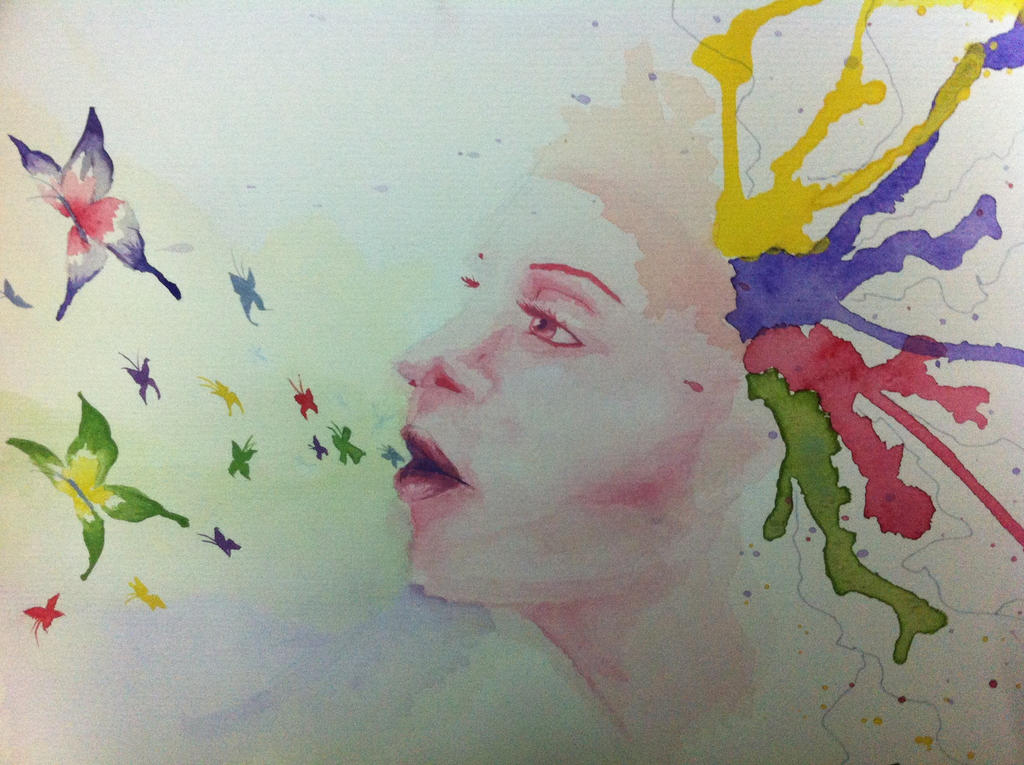
Our hearts seem to have lost their wings, we lack spirituality, and we disguise everything

All this lack of kindness and love
All this selfishness
All this individualism
All this hypocrisy

And these exhausted cities, devoid of culture and taste
And our love, not given or reciprocated
And the time that passes by so quickly

There are also our defeats, our lost dreams, and eventually our death which few will remember

Of course, we are honest, and giving away money that we earned by the sweat of our hands is not easy. But to see people begging for food, for money, crying because there isn't enough food to support everyone

Having to decide who needs it most among our neighbors because of our inability to help them all. Having to look at them straight in the eyes to see their tears and tell them, “Sorry, we are done for today!”

It is time that we put all our differences aside, that we unite our efforts, that we refuse to see a man crying for bread, a woman about to abandon hope, that we give without expecting anything in return, that we give just for the love of all humanity

For all those who have the will to help, let us join forces to avoid seeing hungry people, to avoid having to choose who does and does not receive food aid. No one should be short of food, whatever the economic situation that awaits us

This text was originally written in French by Dr. Toufic Kikano, MD and translated by Hoda Maalouf

Friends on a Mission


Friends on a Mission:  Friends, motivated by love and compassion, joined hands to go on humanitarian Missions... 
Members are (picture from left to right, top to bottom): Toufic Kikano, Nabil Maatouk, Dolla Akl, Arlette Otayek, Carole Otayek, Ritta Hanna, Rogette Sainte Marie, Alain Sainte Marie, Hoda Maalouf


Thursday, May 28, 2015

Break Through With Gratitude


My childhood was not exactly typical. As a result, the circumstances of my formative years instilled in me the practice of never taking anything for granted and of trying to appreciate everything in life—no matter how small. 


I was born and raised in the eastern suburbs of Beirut with a majority-Christian population, where right-wing political parties and militias dominated on the ground. My mother originates from Zahle, a large Christian town in the middle of the Bekaa Valley where a majority of Muslim and left-wing militias dominated during the war. Zahle was put under siege several times and paid an enormous price in term of casualties and destruction over the war period, roughly 1975 to 1990.


When my uncle (Mum’s brother) passed away in the 1980s, the situation in the Bekaa was relatively calm, so my parents decided that we would all go to my uncle’s funeral. All seven of us—Mum, Dad, my two sisters and brothers and I—rented two taxis to go to Zahle and give final respects to my dead uncle. On our way back from the funeral, however, a military road-block was suddenly put on the highway from Zahle to Beirut. Cars were checked and some people, mostly young men, were pulled out and were told to stand aside. We got worried sick! My two brothers were in their early 20s. Although they were never involved in any type of political activity, it was difficult to predict at that time what these militias wanted. They held lists of names for people they were looking for. “Maalouf” is a very big clan in Lebanon, and thousands carry this surname so obviously some of “us” were active during the war. Luckily, my two brothers’ names were not common names and were not included on that black list.  


That evening, we were all quiet at dinner and grateful to our parents for having given us some uncommon names! Seeing all of us at the table that evening was a real blessing and filled my heart with gratitude.


Looking back on those 15 long years living in a war zone, I see that growing up in such circumstances deeply affected me, shaped my very personality, and taught me how to break through difficulties by appreciating life’s most basic gifts: being alive, being in good health and being surrounded by family and friends.


Mercifully, we don’t all live in a country torn by civil war, but we all have other kinds of war to deal with. Keeping a grateful attitude makes us see the positive in every situation—even those that are ugly and violent. 


"Gratitude gives us the drive and energy to get up, shake off the dust, rebuild what was broken and move on with our lives."


To read similar stories, please check my co-authored book Energize Your Leadership: Discover, Ignite, Break Through. It was written by 16 authors with one common goal—to inspire people to rethink their personal and professional attitudes. Sixteen real-life stories were composed for readers who want to excel and make a difference in the lives of their students, colleagues and so on. The book is divided into four parts: “Energize Yourself,” “Energize Others,” “Energize Your Workplace” and “Energize Your Future.” Each chapter’s content stands on its own, so the book can be read in any order. Furthermore, all chapters follow the same framework: the author’s personal narrative, the lesson learned from the story, a few key questions for the reader to ponder, and finally some action steps based on the theme of each chapter. 

Get your copy by clicking here.


* Artwork by Maria Matta

Tuesday, December 2, 2014

How Well Do We Know our Youth?


A famous computer graphic artist, Hiroyuki Hayashida, recently visited our university. Mr. Hayashida is renowned for his numerous animations such as Final Fantasy 12 and 13. His visit to our university involved a two-hour workshop which was dedicated to students majoring in Computer Graphics and Animation. A lecture given during the lunch break was open for anyone to attend.

As I was very busy with my department’s activities, I did not have the time to sufficiently advertise the lecture. I just sent broadcast e-mails about it. When the hour of the lecture approached, I became very tense; I was worried that the turnout would be disappointing. From previous experiences, I know that students are generally reluctant to skip their lunch break just to attend a lecture.

A couple of minutes before the lecture, the hall started to fill in, row after row. Very quickly, all 150 seats were occupied. The hall was so full that some students sat on the stairways and others stood on the doorways, blocking newcomers from getting in.

What happened? I had totally underestimated the passion of our students for Japanese culture. I grew up in the ‘60s and was a big fan of Western cartoons such as “Tom and Jerry.” But for many Lebanese children growing up in the ‘70s and ’80s, the ultimate heroic figure was “Grendizer,” a giant robot in an animated Japanese series—or anime. “Grendizer” and other Japanese series dubbed into Arabic transformed a generation of our youth into anime fans.

Manga and anime have distinctive styles, featuring characters with enormous eyes and spiky hair. What differentiates anime from Western cartoons is the drama. Although anime is no longer dubbed into Arabic and screened locally, Lebanese fans can access it on satellite TV and online. The devoted fans of manga and anime, known as “otaku people,” are so addicted to these Japanese series they have started to enroll in Japanese classes.

When Mr. Hayashida’s open lecture ended, a large part of the audience queued to take pictures with our invitee and to get his signature. These are the Lebanese otaku people.

We normally complain about not being able to attract our students to attend general lectures. It seems that the problem stems from the fact that we have a poor understanding of what attracts our youth. This lecture was a mind-opener to me and taught me three good lessons:
  • Our youth have powerful potentials; we must be courageous enough to change our old ideas and practices so that we may direct these potentials toward good and useful purposes.
  • We must allow today’s youth to be themselves and have their own attitudes and choices, not those of their predecessors—otherwise our communication with them is blocked.
  • Learning about our youth comes as a result of listening. To listen well, we must have empathy, and our empathy will grow as we learn more about the youth.

“The most basic of all human needs is the need to understand and be understood. The best way to understand people is to listen to them.” ― Ralph G. Nichols
 * I would like to thank my friend Richard Pennington for his most valuable comments!
* Enclosed photo of Square Enix can be found here


Tuesday, October 7, 2014

Knowing and Doing What Matters


I was recently involved in a Twitter chat relating to bullying at school. While this problem could have a devastating effect on children, people of any age can be affected by it. Bullying, intimidation and being picked on come in many different forms.

I can recall a story that happened to me while living in the UK in the 1990s. After completing my master’s degree, my thesis advisor offered me a job as a research assistant under his supervision. I was the main bread winner in our household since my husband had already started his Ph.D. and had limited financial support for his research. I accepted this job offer without thinking twice about its conditions. Covering our expenses was foremost on my mind.

So instead of giving me a proper contract that lasted a year, my advisor (I will call him Dr. D. hereafter) offered shorter contracts ranging from 3 months to 6 months with the same excuse: “If you work well and deliver the goods, you will be given another contract.” The situation remained like that for a period of 3 years until one day I received a call from Dr. C., the graduate students’ supervisor. Dr C. wanted to know why I was not registered for a Ph.D. although I had been working as a researcher for 3 consecutive years in the same department. I replied frankly that I couldn’t afford to pay for my Ph.D. fees while supporting my husband. He then replied, “But you don’t have to pay for your fees if you are a research assistant. Didn’t your advisor tell you that?” I was embarrassed to tell him the truth about my short contracts. He then replied, “Go back to your advisor and tell him to register you now in the Ph.D. program. That’s your right.” I did what Dr. C. asked me to do and my advisor accepted my request at once. He could not refuse because he knew that he had been abusing his power and that if it became known that he had perpetrated such an incident, his career at the university could be ruined.

So why did Dr. D. behave like that, and why was I silent about it?

  • I was a foreigner and didn't know what my rights were as a graduate assistant and student.
  • It had nothing to do with me. Dr. D. was very insecure and had difficulties trusting people
  • As I was in a powerless position, I could not officially complain about my abusive supervisor. I needed this work, and there was no safe way to complain and no implemented process by which to fix problems between students and advisors.
  • Never in my mind did I intend to take revenge on my advisor. After I registered for my Ph.D., Dr. D. learned a lesson from his mistake and did not repeat it with another student.
“I would rather be a little nobody, than to be an evil somebody.” ― Abraham Lincoln
Not everyone has been the victim of bullies, but everyone has seen bullying and abusive bosses, advisors and personnel. Seeing it and keeping silent and not objecting, could have a damaging effect that lingers for years if not decades. Not only knowing, but doing what is right, is what really matters.
“If you are neutral in situations of injustice, you have chosen the side of the oppressor. If an elephant has its foot on the tail of a mouse, and you say that you are neutral, the mouse will not appreciate your neutrality.” ― Desmond Tutu
We focus in this world so much on our differences. This has helped lead to negativity and bullying. If, on the contrary, everybody focused on what we have in common, our humanity, we would be able to live in harmony. And instead of fighting about our diversity we would be celebrating it!

* I would like to thank my friend Richard Pennington for his most valuable comments!
*Enclosed photo can be found here

Sunday, August 31, 2014

Friendship: The Best Thing that Comes to Life


It seems that life in my region goes through a closed circle. When you feel that you have reached a degree of peaceful living and you start to make tentative plans for your life, violence erupts again and brings you back to square one, as uncertainty and stress dominate.


In the past, I have managed to overcome my stress through different activities such as drawing, reading, watching movies and listening to music. In the last couple of years, however, social media has been my stress-relief tool. I started actively using the Internet around the year 2008, connecting with my old friends scattered around the world and making new friends. 

Friends through social media come and go just like in real life. Nevertheless, they can truly affect our lives during the span of our connection and sometimes well beyond.

I recall when Dad was on his death bed, he kept asking Mum about his old friends and neighbors. Mum first thought that he was delusional and said, “Why don’t you ask about your brothers and sisters?” His answer rather striking: “My brothers and sisters know that I am about to die and have not shown up for a visit. I want to know if my old friends know how I am doing and if anyone inquired about me.” Dad’s statement was clear and came straight from the heart. 

Dad had an outgoing and remarkable personality that made him very lovable and enjoyable to be with. When he died at the age of 94, a large number of his long-lost friends attended his funeral service. 
“If you live to be a hundred, I want to live to be a hundred minus one day so I never have to live without you.” ― A.A. Milne, author of Winnie-the-Pooh
Coming back to me, over the years and especially during our times of crisis, many of my current and long lost friends contacted me to offer help and support. Do I expect everyone to call? Of course not. Some could be overwhelmed dealing with their own personal problems. It seems that others wish to join me only during times of happiness or peace, or connect with me because they simply need me and do not want to give anything in return.

What I have learned from the many different friendships I have made over the years in real life and on social media is the following:

  • Being afraid to connect with new people because they might not become genuine friends could endanger the possibility of making any valuable connection. 
  • Getting obsessed with the idea that social media friends are not real and can’t do any good for us is an absurd thought since over the years some of my social media friends showed me far more empathy and compassion than the “real-life” ones.
  • Showing people that you care does not mean that you want to possess them. It only means that they are special; they can count on you at any time and trust you with their friendship. 
  • Trying to contact someone after a long period of disconnection does not mean that you are out of touch with reality. People we once loved and cared about are always in the back of our mind and they can pop up unexpectedly in our thoughts and in our lives. 
  • Don't be too busy for your friends, and don't take them for granted. When I ask myself which person in my life means the most to me, I often think of those who have equally shared my joy and pain, talked to me in an hour of confusion and listened to me relentlessly.
“Don't walk behind me; I may not lead. Don't walk in front of me; I may not follow. Just walk beside me and be my friend.” ― Albert Camus 

* I would like to thank my friend Richard Pennington for his most valuable comments!


Tuesday, April 1, 2014

Serving With Heart


“There is no need for temples, no need for complicated philosophies. My brain and my heart are my temples; my philosophy is kindness.” ― Dalai Lama
My love for people seems to have started at a very early age. Being brought up in a busy neighborhood in Beirut shaped my love for service and leadership. The other kids flocked after me to play and to join any activity I started. While some of them enjoyed kindling quarrels, I was the one who solved the problems and found a peaceful solution among my polarized friends.

My life was going perfectly well, I had lots of friends, was highly active and an extrovert until the age of 11 when the civil war started in my country. Partly for reasons of personal safety, I suddenly turned inward, left my neighborhood friends and their stories, and sat down alone, listening to music and reading countless books. At first, my books were about romance and fiction, and then I shifted to more serious materials—like history books, memoirs and literature. Reading was my escape, my mind developer and my future shaper.

At the age of 16, I thought I knew what I would do with my life. I wanted to rise above my ugly, brutal reality and change things, creating something new. I had big dreams, and I wanted to achieve them. Nothing would stop me from pursuing them, not even the war. I knew the only way to achieve that was to focus on my studies and work hard.

In spite of the dreadful situation in my country, I managed to excel at school and university. This enabled me to seize a very rare scholarship to pursue higher education at one of the most prestigious universities in the United Kingdom.

My love for people and my social skills resurfaced when I moved there. It was because I could relax and enjoy a normal life, and was no longer living in fear. I met lots of people who quickly became my friends. I hosted parties and was the glue among my diverse friends who came from different backgrounds and countries.

After completing my Ph.D. studies, I came back home and joined the faculty at Notre Dame University. In addition to teaching, I was the academic advisor of a large number of students. Working in academia was a blessing for me as it allowed me to be in contact with and serve many students on a daily basis.

At the end of my second year at NDU, I was asked to chair my department. I accepted the offer without any reservation because I knew deep down that with this new position I could do what I love best: connect, listen and serve.

There are endless stories I could share about my work here, but I am particularly fond of the following one:

In one of my classes, I had a timid student who sported a punkish hair style. In the middle of the semester, he disappeared and I knew nothing about him until his older brother came to fill in a withdrawal form for all of his courses. I enquired about his reason for having dropped the semester but the brother refused to talk about it. Two years later, I had a call from the student affairs officer who had an unusual request.

He said, “I would understand if you refuse to help because the other chairpersons have refused, but I just want to try with you.” He then added,There was a student who took a course with you two years ago who dropped the course. His name was X.” I said,Yes, I remember him very well.” He replied, “Well, he disappeared from your class because he was arrested for possession of drugs and then he was put in jail as the quantity he had was slightly larger than that of personal usage.” Then he added, “Now, he is totally clean from drugs and is feeling really wasted and just needs another chance to resume his courses.” My immediate reaction was to ask how I could help the young man.

Then we agreed that I would send him all the course materials and the student affairs officer would pay a visit to see whether he was facing problems and report back to me. The student sat for an exam in the presence of the SAO officer and passed the course. The following semester, he passed two courses that I arranged with other instructors from my department. The next academic year, I got a surprise visit from my formerly estranged student. He looked older and wiser. He gave me a good hug and thanked me for what I had done. Then we sat together and discussed how he could proceed to finish his degree. He did just that and started a new life, sober and clean.  

Finally, let me share with you the basic lessons I have picked up from my modest experience in serving others:
  • If you connect, listen and help with all your heart, your actions will be echoed all around you and for many years to come.
  • You need to support and aid others before starting to lead them.
  • Embrace diversity, accept people for who they are and acknowledge that we are all different in the way we perceive the world, in what we like or dislike.
  • Empathize, let your people feel that you care for them and that you share mutual trust. They will open up to you, and their problems will become less overwhelming and manageable.

 “Choose a job you love, and you will never have to work a day in your life.” ― Confucius


* I would like to thank my friend Richard Pennington for his most valuable comments!

Friday, February 7, 2014

You Can’t Hurry Love—No, You’ll Just Have to Wait


I was two years old in 1966 when the Supremes came out with that big hit song on Motown Records. Written from the perspective of a mother to her impatient daughter, it contains a lot of wisdom.

Along the same line, these days just about the only thing we receive by post is junk mail, bills and business letters! We rarely get something we really cherish unless it’s a gift sent to us or a book we have ordered. I don’t even know the postman who delivers my mail these days. If you know yours, you are fortunate. 

I recall when I was younger and madly in love with my boyfriend (who is now my husband). He had gone to the US to pursue his graduate studies. At that time, there was no Internet and the landline telephone system scarcely worked as we were in the midst of the civil war in Lebanon. I used to write a diary every single evening and then after two weeks I sealed it in an envelope and sent it to him by post. I did that religiously, and he did the same. Our letters took two or three weeks to cross the Atlantic Ocean and the Mediterranean Sea, and I waited for them patiently and with anguish. 
“The frankest and freest and privatest product of the human mind and heart is a love letter.” ― Mark Twain
The postman who brought these love letters was a very nice man in his fifties. He quickly realized how much they meant to me, so every time he had something for me, he rushed to our house with a big smile on his face to hand me the letter. I can still remember him coming from down the street to our house in such a kindly manner. And when he crossed the street with no letter for me, he would make a “sorry” sign on his face, letting me know that I had to wait a bit longer for the next letter from the States. I dreaded Sundays and holidays because I knew the postman would not be knocking on the door.
 “More than kisses, letters mingle souls.” ― John Donne
The arrival rate of these back-and-forth love letters could not keep pace with our elevated heart rates, so my boyfriend cut short his stay in the US and came back home to finish his master’s degree at a local university. As a result, the letters stopped coming. The kind postman worried that my boyfriend had left me, so he asked Dad about me to make sure that I was doing fine. 
“Patience is bitter, but its fruit is sweet.” ― Jean-Jacques Rousseau
Nowadays, we are far removed from the ’80s, when there was no Internet, instant messaging or Skype phone calls. This is affecting all of us and in particular the younger generation which has grown accustomed to being bombarded with fast-turnover information; they filter it instantly without paying much attention to its meaning. Our whole society is becoming instantaneous, just like instant messaging, instant photography, instant news, instant coffee and so forth. We are unwilling to decipher any complicated messages, wanting things simple and fast. Depth and nuance are out the window.

The biggest weakness of today’s generation is impatience. If I may generalize, it seems that young people want to see things happen immediately or get changes in place right away. They have no patience to let things develop and watch as situations ripen. Real dreams take work and time—and yes, patience. That tends to win out in the end.
“Traveler, there is no path; the path is made by walking…Beat by beat, verse by verse.” ―Antonio Machado

* I would like to thank my friend Richard Pennington for his most valuable comments!

Sunday, December 15, 2013

Gifts That Really Matter


As the holiday season approaches, we see more quotes and posts about gifts, Santa Claus and Christmas lists. One that caught my attention lately says, “I think as you grow older, your Christmas list gets smaller and the things you really want for the holidays can’t be bought.” Reading this quote made me think how my Christmas lists have changed over the years.

Like any child, I loved dolls and soft toys but I had only a few as my parents could not afford to indulge me with presents. We were five kids and my dad’s job was not going well at the time. What mattered most to my parents was for us to be well educated and well fed. Dolls and toys were never a priority for them, even for Christmas. During my impressionable childhood, this was somehow upsetting to me. But now I have the perspective of a few years, and when I reconsider the situation, how much did I miss? Not much at all. On the contrary, having only what was strictly necessary made me appreciate more what was really important in life and motivated me to work harder and improve my status.
“The greatest gifts you can give your children are the roots of responsibility and the wings of independence.” ―Denis Waitley
I was 11 when the civil war started in my country. The surrounded violence turned me from a joyful extroverted child to an introverted teenager. I loved reading, drawing, listening to music and watching movies. The gifts that I enjoyed most were music tapes and CDs. I never had any interest in fancy gifts, and that never changed in me. In fact, I recall an incident in one of my wedding anniversaries; my husband surprised me with an expensive piece of jewelry. But he was disappointed upon seeing my facial reaction when I opened the gift. At that time, I wished that he had bought me Time Traveler, a set of five CDs by the Moody Blues that I had seen earlier with him. He knew how much I loved this band and how much I cherish such gifts. 

The years went by, and the thing I wanted most was to have a child. But this was not an easy task for me. Ironically, the only tests I ever failed in my life were pregnancy tests. But I never gave up. Deep down inside, I knew I would have my own kids. Finally, after 20 years of childless marriage, seven IVF trials, loads of medicines and injections, and three miscarriages I had beautiful twins, one of each gender.
“Everything you need will come to you at the perfect time.” ―Unknown
Since the day they were born, my twins were pampered with expensive presents by family members and friends. But what amazes me most is that my four-year-old kids are more interested in some unusual gifts that they can buy from a vending machine in a local store, made of very small plastic boxes that cost almost nothing, each of which contains each a small toy. My daughter and son are always fascinated by these tiny gifts, which may contain fake jewelry, colorful bouncing balls, tiny cars or some build-it-yourself toys. This reminds me that the joy brought by any gift has nothing to do with its size or material value; it’s only the pleasure of unfolding it and discovering what is inside that matters most.
“Surprise is the greatest gift which life can grant us.” ― Boris Pasternak
Almost two years ago, my father died at the age of 94. He left behind some great stories and memories. When I visit my parents’ house, I always expect him to appear from behind, but he doesn't. There is nothing that can replace the absence of someone we love, and why even make the attempt? Our memories and gratitude are our precious gifts that can fill the emptiness created by the loss of our loved ones and transform the pain of their loss into acceptance. 

Thus, the gifts that I appreciate most are the ones that are useful in my life—that is:
  • Love, to give and receive abundantly.
  • Peace, to be able to live freely and with dignity.
  • Time, to live and love the way it matters to me. 
“Everything I know, I know because of love.” ― Leo Tolstoy, War and Peace

* I would like to thank my friend Richard Pennington for his most valuable comments!
* Corel Drawing by Hoda Maalouf 

Thursday, November 14, 2013

Precious Dreams are Never for Sale

The Painting

My father was always a big dreamer. One of his dreams was to find hidden treasures, priceless antiques and pieces of art. He was very much influenced by his father who had an intriguing life. Grandfather worked for Baron Max Von Oppenheim (1860−1946). He was engaged as Oppenheim’s secretary for most of his expeditions in the Near East region. He wrote detailed journals about the Bedouin tribes they encountered, the excavations they undertook and the ancient scripts they copied by hand. Fascinated by his father’s stories and voyages, Dad had big plans for every one of us, including himself.
“It is not true that people stop pursuing dreams because they grow old, they grow old because they stop pursuing dreams.” – Gabriel Garcia Marquez
One of Dad’s greatest findings was an old oil painting that featured a noble man and was signed “Titian.” Dad bought the painting from a junk shop that obviously did not know its real value. He brought his treasure home and showed it to us in a religious way. The painting was in a dreadful situation with lots of cracks in the canvas; it was almost falling apart.

Back then, in the late 1980s, there was no Internet or Google, so Dad searched hard for books about Titian (14901576), an Italian master painter. But he could only find one that briefly described his work, depicting just a couple of his paintings. This kept us puzzled for a quite some time especially since the “painting” was done in a similar artistic style. Dad also asked some experts who were supposed to know about old paintings. They all confirmed its old age, but none seemed to have seen it before in books or elsewhere.

As no one could verify that the painting was authentic, Dad decided to preserve his treasure, hiding it in a safe place, waiting for the right moment to reveal it. Sadly, it was my duty to kill my dad’s dreams and tell him the bad news that it was just a replica.
“Hold fast to dreams, for if dreams die, life is a broken-winged bird that cannot fly.” – Langston Hughes
In 1999, I went to Austria to visit a good friend and spent two weeks in Vienna and Salzburg. While in Vienna, I visited most of its museums and in particular the Kunsthistorisches Museum. I have always been a big fan of Vincent Van Gogh, so I looked at the map to find how to reach the impressionists’ rooms. I followed the map, and in the first hall I entered, there stood my Dad’s famous painting! My heart stopped beating for a while. I sat on a bench and stared for half an hour at that magnificent drawing, very similar to the one at home, with the same colors and the same size. Simply the same, only it’s in a better condition. Tears came to my eyes while thinking about Dad’s crumbling hopes. Why did it have to be me to break his heart!

Afterward, I went to see Van Gogh’s paintings but could not concentrate or enjoy them. My mind was still there in Titian’s room. I went back to that hall, sat and looked at the “Portrait of Jacopo Strada. (Strada was an Italian contemporary of Titian’s, a painter, goldsmith, architect, inventor and linguist.) Then I bought a book about Titian from the museum where Dad’s painting is depicted, and took it home with me.

A year later, Dad offered me the painting as a gift when my husband and I moved to our new home. I took the old replica to a restoration artist who worked beautifully on it and brought it back to its splendor. The restored painting—so what if it’s a replica?—was very popular in the artist’s shop, and many customers offered to buy it. My answer was an emphatic NO. My dad’s dream was not for sale. This painting which now grandly hangs on the wall of our home is a constant reminder of Dad and a good lesson that without our dreams and hopes, we lose the excitement of possibilities.
“I prefer to be a dreamer among the humblest, with visions to be realized, than lord among those without dreams and desires.” – Khalil Gibran


Monday, October 21, 2013

Memories Die Hard


Couple of months ago, I read an interesting post entitled “Leaders Know When It’s a Good Day to Die Hard” by a friend, Dan Forbes, founder of the Lead with Giants Community of which I am a member. When I commented on the post, I mentioned that I remembered only watching the first movie of the “Die Hard” series, although I might have watched a couple of them. I was able to recall the first of the series probably because it reminded me of a story that happened back in 1975 when I was just 11 years of age.
“Memory…is the diary that we all carry about with us.” ― Oscar Wilde
The war started very close to home. I was born and raised in the east suburbs of Beirut with a majority-Christian population and where right-wing political parties and militias dominated on the ground. Less than 1 kilometer away from home, there was a small zone where a group of people from other political inclinations, religions and nationalities lived. Naturally, when the conflicts started in the heart of Beirut, other regions of the country soon had their own daily frictions among different conflicting groups. This also happened in what had been considered “my safe neighborhood.”

When the violence erupted around that mixed zone, the local right-wing militia decided to put an end to it and to cleanse from that spot anyone considered alien to the region. A fierce artillery fight started. It was the first time in my life I had ever heard such loud, scary noises. At home, mum, dad, and my brothers and sisters were all agitated and did not know where to hide or what to do. Since our house was full of windows, it had always been considered a healthy place to live with the sun infiltrating it from all directions. But it suddenly became hazardous because of the risk of getting hurt from the broken windows and shattering debris incoming from all directions.

The battle to take over that spot lasted only a couple of days. When we heard the good news, we thought, perhaps naively, that “finally” the violence was at an end. But what we didn’t know was that some of the defeated militias had managed to run away from the spot, were hiding in neighboring homes and were taking hostages. That’s what happened to our peaceful neighbors living in a building just 50 meters away. Four heavily armed gunmen entered their building, and took them hostages along with all the other residents of that building. They were forced to go to the top floor. Then the gunmen started to shoot, targeting the surrounding buildings. When we heard the very close shooting, we all ran to hide in the corridors, the safest places in our house. The local militia could not attack the building because of the taken hostages, so they decided to force their release by using a horrid technique that I can never ever forget
“The mind replays what the heart can't delete”―Unknown
A lineup of approximately 50 captured men, of all ages, passed in front of our house down the road until they reached a big, long perpendicular wall, which was used as a fence for a neighboring convent and home for the elderly. Among those poor people being led at gunpoint, there was one man who shouted dad’s name when he passed by our house, begging dad to save his life. I recognized his voice; he was an old man who used to sell us fresh oranges from his garden. Without a second thought, dad reacted to help the peasant by asking one of the militia guys to release him because he was a peaceful person and we would shelter him at home. The guy shouted angrily at dad, telling him to go inside and not get involved.
"To dare is to lose one's footing momentarily. To not dare is to lose one’s self." ― Soren Kierkegaard
All the captured men were forced to stand against the long wall. Using loud speakers, the local militias ordered the four gunmen to release their hostages. Otherwise, they would shoot the captured men one after the other. Shortly after that we heard a lot of screams and firing of guns. Horrified with all that was happening, I started to cry, taking refuge next to mum and dad. Finally, the gunmen ended up by surrendering. We later learned that none of the hostages or the captured men was killed, as the militias were only hitting some of the younger ones and firing in the air. A tentative peace came back to our neighborhood, and, what we thought was the end of the violence was actually just a truce preceding a long civil war.

Memories die hard when our innocence has been hurt so deeply. Those stored memories from 1975 come to my mind again and again, reminding me of the horrors of war. Being exposed to such situations, in spite of the atrocities involved, taught me some good lessons in life and how to behave when emergency strikes. Such lessons are that:
  • We must resist the urge to respond to aggression with more of the same. If not there is a big risk of unintended casualties.
  • We need to have the courage to take risks and speak up for what we believe in. "It is only by risking our persons from one hour to another that we live at all." ― William James
  • Even in extreme situations,we need to retain our essential humanity and aim to support others rather than spectating on them. "Never let the odds keep you from doing what you know in your heart you were meant to do." ― H. Jackson Brown, Jr.
  • Family support and love are very important. Love gives us courage to overcome fear and the giving and receiving of support strengthens our resilience even in extreme situations.
“I must not fear. Fear is the mind-killer…. I will face my fear. I will permit it to pass over me and through me. And when it has gone past, I will turn the inner eye to see its path. Where the fear has gone, there will be nothing. Only I will remain.”― Frank Herbert

* I would like to thank my friends David Hain and Richard Pennington for their most valuable comments!
* Drawing & Collage by Hoda Maalouf